Friday, October 15, 2010

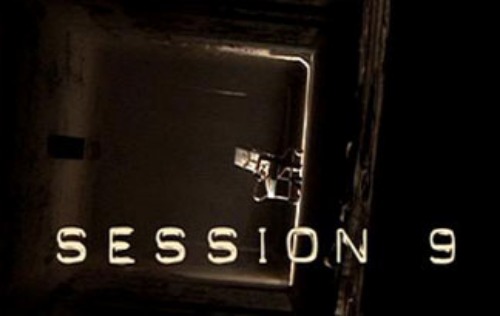
31 days, 31 faves: Session 9


Session 9 (2001) is seriously one of the most frightening films I have ever seen. But I have mad, mad love for it. Not only does it boast an incredibly scary locale - the stunningly massive Danvers State Hospital in Massachusetts - but it has the best kind of horror to induce chills - the quiet kind. Director Brad Anderson knows just what to do to give you a serious case of the willies.

Gordon (Peter Mullan) is the owner of an asbestos removal company and has made a bid to clean up the old hospital. Considering he makes an outrageous bid stating he can get the job done in one week (whereas it should really take 2-3 weeks), he lands the gig - with a special monetary bonus if he actually does finish on time. We quickly learn that Gordon is really hurting for funds, which is the reason he lied about being able to get the job done in such a ridiculously short period of time. It's also evident that this is weighing on Gordon pretty hard, as he seems pretty disconnected and fragile. When checking out the place when he's bidding on it, he has an episode of some kind when he sees a restraining chair off in the distance, sunlight hitting it ominously. He seems to be taken to another place and time, and hears a voice calling out to him: "hello...Gordon."
It's such a creepy scene that already we know we're in for a treat.

On start day, Gordon brings a crew of four other guys with him: his right hand man Phil (David Caruso), Mike (Stephen Gevedon, also co-writer of the film) - a law-school drop out who has a special interest in the history of the place, his greenhorn nephew Jeff (Brendan Sexton III)- who suffers from an extreme fear of the dark, and lastly Hank (Josh Lucas) - a man who has stolen Phil's girlfriend away from him and brags about it every chance he gets.

Prior to going into the hospital, the men discuss the eerie place and the various things that have happened there. Many of the former patients were let out onto the streets when the hospital closed, and quite a few of them ended up back there, squatting. As if that isn't creepy enough, they have a chat about the barbaric things the doctors used to do to "treat" the patients there, such as frontal lobotomies. Good to know...

The guys check the place out, getting it ready to start the removal process. Mike goes down to the basement to check on an electrical problem and finds a box that is marked as private "evidence". Naturally, curiosity overwhelms him and he finds a bunch of recordings, each marked as a session (and of course there's NINE of them, natch!). Upon listening to them it's obvious that the subject suffers from multiple personality disorder. Her name is Mary Hobbes, and she is listed as patient 444. At first she talks as herself, but then morphs into Princess, a young girl that talks about dolls and Christmas, all innocent enough. When the doctor asks to talk to Billy, she says he's asleep, and when he brings up Simon, Mary completely shuts down and doesn't want to talk anymore.

Upstairs, Gordon seems to be having a lot of trouble focusing. He hears the same disembodied voice say to him: "you can hear me", and though he claims to be okay, he's often seen staring off into space. He and his wife are having issues. They've just had a new baby, and so Gordon isn't getting much sleep and his stress level is fairly high, though he doesn't let on.

Mike becomes completely intrigued by the sessions, and finds his way down to the basement for long stretches of time to listen in. As he listens to the tapes, the director cuts off to everyone else, either working in the hospital or at home at night, going about their daily lives. It's actually quite haunting, the voiceover. Mary describes where each "personality" lives in her body. Princess is in the tongue, Billy in the eyes, etc. But she doesn't answer when he asks about where Simon lives...

Hank, while at work in a lower level room by himself, finds some coins from the 1800's. Checking around a bit more, he finds more coins stuck in one of the walls. When he removes a brick, tons of coins fall out. In addition to money, jewelry is also included in the stash. Phil calls Hank on his walkie-talkie to rejoin them upstairs and so Hank stuffs the money and jewelry back into the wall and leaves. Guess he doesn't realize it's a cremation chamber. Gah!

Teasing Jeff at lunch that day, Mike explains the lobotomy procedure, giving a chilling account of how the brain becomes numb after such an action but that the patients were no worse for wear, at least not on the outside where it is noticeable. Jeff is understandably rattled and walks off.
And later, Gordon observes Phil outside the hospital talking to a couple of young guys. It's obvious Gordon doesn't like it and wants to know what is going on, but nothing is said.

When Hank comes back alone late at night (!) to take the stash he'd hidden, he hears someone close a door upstairs. Even though he's wearing the equivalent of an iPod, the noise is loud enough to disturb him. Shaking it off, he gathers his goodies (which now also include some glass eyeballs and a frontal lobotomy tool) and heads off. On his way back upstairs, he stalks the long (and utterly unnerving) hallways, he hears a noise and points his flashlight up at it. In a key point in the film, a shadow crosses the hallway in the distance. It is a seriously startling and terrifying moment. The first time I saw the film I thought about that scene for days afterward. And thinking about it now gives me the chills.
At that point, Hank starts running. Yeah, no kidding.

The next morning, Hank doesn't show up for work. The remaining four guys are arguing about where he might be until Phil calls Amy (his ex and Hank's current girlfriend), who tells him Hank packed up his car and went off to Miami to attend casino school. With tempers flaring at this point, Gordon brings up to Phil the guys he was talking to the day before. Phil hasn't a clue what he's talking about but Gordon doesn't let up, at one point even grabbing Phil and shaking him to try to get an answer, right in front of the other guys. It's a tense moment, and one that further solidifies the fact that Gordon just might not be altogether with it. He's at the very least struggling with something. He goes back inside the hospital to think while the other guys chat about how Gordon's home life is seriously screwing him up and making the jobs impossible.

Gordon, sitting outside now near the hospital cemetery (which is marked with numbers, not names), calling his wife to ask her forgiveness. We don't know what happened, or if it is just because there has been so much stress as of late. When the camera pans down, we see the tombstone of number 444 - the Mary Hobbes patient that Mike has become so obsessed with.

Mike, meanwhile, has went back to the file room to listen to more sessions. He also has looked up her file, so he's been reading along while listening. When Mary talks about herself, the doctor presses her for more information, trying to discover what her breaking point was. Mike notices words like "tragedy" and "multiple personality disorder" written in her file, and sees pictures that have been drawn (by one of her personalities) of a family, and photos of Mary herself, with scars all over her chest. But still...no Simon.

Finally we get a bit of info from Gordon. He and Phil are having a little heart to heart in which we discover Gordon hit his wife after she spilled boiling water on him accidentally. We also learn Gordon has been staying at a motel instead of home.

That night, Gordon falls asleep in his car outside the asylum. The ghostly voice tells him "you know who I am", and we get a little flashback to the night (by way of Gordon's dream) that he hit Wendy. We never see the act itself, only hear the water fall and his wife's cries. And right at that moment, the voice whispers: "Do it Gordon." And he wakes up. We see the second degree burn on his leg as he winces in pain when applying iodine. And then for us, another glance at that restraining chair. What gives?

At work the following day, Phil has a discussion with Mike about Gordon's mental status. Phil explains that Gordon simply has to take some time off. He breaks Gordon's confidence and tells Mike about Gordon hitting his wife. Phil is worried about losing the gig, and even though he's called another guy in it's hard to tell if they can finish up in enough time to get the early completion bonus, which they all need. Unfortunately, Gordon is one floor down but near a stairway where the other two men are talking and he hears every word.

Jeff has been sent downstairs to check on something, and on his way back up, he sees Hank - standing in the stairwell with a pair of shades on and staring out the window. Never looking at Jeff, Hank simply states, "What are you doing here?" - twice, completely lacking any emotion whatsoever. Duly freaked out, Jeff runs to tell the others. But when they all follow him back down, Hank is nowhere to be found. After hearing someone walk above them, they set off looking for him but all end up splitting up.

Naturally, Mike heads back to the basement to listen to the last of the sessions.
Session 9.
The psychiatrist is urging Mary (who is now speaking as the uber-polite southern boy, Billy) to tell him what happened on Christmas night all those years ago.

As Phil searches for Hank down a deserted tunnel hallway where he hears soft jazz playing in the distance, Jeff in turn has a frightening experience with the lights. In other words, they all shut off one by one, effectively rendering him completely helpless. He begins to have a desperate panic attack. Gordon hears the voice again, and rushes towards it, as it seems to be real now.

Tension escalates tenfold as the outside generator that keeps the power on shuts down completely. Mike rushes back outside to mess with the generator - MUST HAVE POWER! He's obsessed with finding out what happened to patient 444. (And believe me, so are we.)
As Mike is heading back inside, we hear the recorder kick back on, and a voice - the one that has been haunting Gordon for several days - says: "Hello, Doc." It is the elusive Simon.

I've already told too much. But that's still not the end of the mystery. There is more to learn...frightening things to discover. And a grim ending you could only expect after sitting through the film in its entirety.

It must be mentioned how much of an effect the actual film location has on the film. The sprawling Danvers State Hospital is an absolutely chilling piece of architecture. Closed in 1982 (and partially if not completely torn down at this point), Danvers has the dubious distinction of being the place where the frontal lobotomy was perfected. The place is not just spacious, it's utterly endless. Being an aficionado of all things ghostly, I've seen the asylum on some of those "ghost hunter" shows a while back, but to see a 100 minute film in which you get to see it in all its so-called glory - broken windows, paint-peeling walls, rooms with old broken-down medical equipment just lying around...the place is in total disarray. For a reason I cannot explain, I am genuinely spooked out by the inside of this asylum. The atmosphere counts for SO much here.

I've heard many people say they didn't get this movie, or that it's too long or the narrative too confusing. I'll agree that you really have to pay attention throughout the viewing. It's not something you can be watching while doing your taxes or chatting with a friend.

It's a very compelling film about madness and how it affects not just the afflicted, but those around them. Falling into the abyss is a private matter, but sadly others are drawn into the situation unintentionally. It also shows the power that a certain location can conjure, the thought that we don't have anything to fear, we have everything to fear.

Thursday, October 14, 2010

31 days, 31 faves: The Changeling


As is obvious from the amount of ghost stories I've had on this month's 'favorites' posts, I'm a rather big fan of a well told spooky tale. The Changeling (1981) - and no, not that Angelina Jolie movie! - is one such film. One of the best.

John Russell (George C. Scott) has recently moved from NYC to the outskirts of Seattle due to the untimely death of his wife and child in a freak accident he was unfortunate enough to witness. (And I really must mention that old George looks more like a grandfather in this movie than a father. The young girl is like, ten. The mother/wife no more than 30. George already looks 70. Weird. Just weird.)

He ends up renting a beautiful old manor house that has been owned by the local historical society yet unoccupied for the past twelve years.
That'd be your first clue.

He strikes up a friendship with Claire (Trish Van Devere), the woman from the historical society who showed him the house. They meet up again at the symphony, where one of the main benefactors, a state senator named Joseph Carmichael (Melvyn Douglas), is giving a speech about donations to keep the symphony going. Claire, and her mother who has tagged along, both don't think too much of Carmichael, all but calling him crooked.
The next day, when Claire brings some things over to the house that have been in storage, she helps him unpack, finding a ball that his daughter used to play with. One awkward moment later and Claire is dashing to leave, but ends up taking John with her out riding.
I smell a romance brewing here...

A music composer and professor, John soon sets about getting back to a symphony he'd been writing when weird things start to happen. Windows break for no reason. Doors open and close without being touched. But worst of all, John wakes several days in a row to a banging sound that would send me running for the hills. He voices his concerns to the handyman, who reassures him that old houses make strange noises.
Yeah, that makes it all okay.

When he goes to the historical society to ask if there's ever been any problems at the house, though Claire isn't able to tell him anything Mrs. Huxley, one of the heads of the board, complains to him that Claire rushed his paperwork through before consulting with everyone else, and that the house "isn't fit to live in", adding that "it doesn't want people." O....kay.

Finding that rather silly, John continues his search for answers (because he's still getting the regular banging noises and sometimes hears what sounds like voices). Snooping around a bit more, he finds a hidden attic door covered over with a bookcase. Upon breaking into the room by banging off the huge lock with a wrench (um...it's a rental, keep that in mind) he gains entry and finds a child's room, covered in cobwebs and dust. Stranger still is the music box he opens - it is playing the exact melody that John had "composed" earlier that week.
NOW it's time to get the hell out.

But NO, he brings Claire into the investigation. They research the house history but really can't find anything conclusive. Mrs. Huxley gives them the name of the family that lived in the house prior to 1920, but before they check into that, they head to the attic of the house and find an old child's wheelchair. Interest piqued, they head to the local library and discover a little girl was hit by a car and killed right outside the house. Naturally this takes him to the cemetery where she is buried, which brings back the horrible memories of his daughter's death. John feels the house is trying to reach out to him, because of the similarities between the death of the little girl Cora and his own daughter.

Even though Claire warns him to leave the house, we find John sitting in his library later, looking through an old photo album of his family. Suddenly, his daughter's ball comes bouncing down the steps and stops right outside the doorway of the library. Rattled, John takes the ball and drives out to a bridge outside of town where he promptly tosses the ball over the side.
Not five minutes after he returns, he hears some quiet laughter and the ball comes bouncing down the stairs yet again, and this time, John is downright terrified. Who wouldn't be?
Amazingly, he STILL doesn't leave. He next goes to consult a psychic researcher, who suggests they hold a seance at the house.

The night of the seance, the medium agrees something about the house is troubling. She does psychic handwriting while under her "trance" and though she isn't writing actual words or sentences, her scribbling becomes more and more frenzied as they go along. She seems to be able to speak to the ghost at the house, and the further she goes, she starts to actually write words, like yes or no. They ask if Cora is the one haunting the house but she writes no. (This woman is a human Ouija Board!) When she asks the spirit's name it writes Joseph.

This isn't the best news to get, considering they thought the ghost's name was Cora. The spirit continues to talk through the psychic, claiming it wants John to help him. When it seems like she's went a bit too far, apparently the ghost gets pissed, throwing the cone in the center of the table across the room to break a glass dish on the mantle.
And he STILL doesn't leave. Guess he's just too far gone now.

The next day he plays back the recording of the seance, only to hear a very quiet voice whispering the answers to the questions. Indeed the ghost admits his name is Joseph.
Now, more intrigued than anything else, John just can't let it go. When he hears Joseph whispering something about his father is the reason he died, and then something about a medal, John is shown a glimpse of the past in which an older man is drowning a young boy in a bathtub. The child, being held by his feet, continually bangs on the side of the cast iron tub (hence the banging sounds John had been hearing), until he finally dies. It is only then that the ghost mutters his last name. Carmichael. Just like the senator.

So at this point, John is barely able to contain his feelings of grief and is utterly overwhelmed at what he's discovered. He calls Claire, but as he's talking to her, he passes out (in fine dramatic fashion, I have to say!)
While most people should be heading off to the hospital, he seems to have recovered fairly quickly, as in the next scene we see Claire, overcome with sadness after having listened to the recordings herself. When John comes to her side to comfort her, she stares up the stairs with such a look of extreme fear you'd have thought Satan himself was standing there. Instead, it's the dirty old wheelchair they found in the attic. Quite a spooky moment.

The search and eventual discovery of the true mystery of the house and the ghost is as interesting and compelling as an Agatha Christie novel. There are some truly chilling moments in the movie, and just when you think you have things figured out, you don't.
I have no intention of giving away the ending, as I think everyone should see this film for themselves, as this one of the best ghost stories I think has ever been produced. So if that's you cup of tea, drink up - cause this is one fine film.

Wednesday, October 13, 2010

31 days, 31 faves: Psycho II


I don't think it's any secret that I am a huge lover of all things Psycho (the film, that it. Nut jobs can steer clear!) I've written about the subject several times for several sites and here on my own paltry blog. Not only is the original Psycho the wonder of all wonders for me, but I happen to be thoroughly captivated by the sequel as well. Now, there are two more in the series after this one, and being such an appreciative Psycho fan, I enjoy them all - but shall I just say this one really does it for me.

I saw it at the drive in way back in 1984, and consider it one of the better sequels made. Period.

Norman Bates (Anthony Perkins, who else?) is finally out of the slammer. After 22 years he has been deemed mentally sane and fit for release. His shrink, Dr. Raymond (Robert Loggia) is happy as a clam, congratulates him and swears everything will be alright. (That's what they all say!) Meanwhile, causing a ruckus in the courtroom is Lila Loomis, sister of Marion Crane - the shower victim from the first film, if I really have to tell you. Lila is damn sure everything is not going to be peachy keen. She rants to the judge about her misgivings but he isn't hearing it. Even when she provides a petition (signed by 743 people!) the judge basically just waves her away.

Let's talk about Lila for a second. First of all, she could only get 743 signatures? I mean, if you were really trying to prevent a guy from being released back into mainstream society wouldn't you have tried to do better than that? Why didn't she launch a Facebook campaign? That's really the way to go. Oh yeah, 'cause it was 1983 and it didn't exist. Still, I think if there was a chance someone like say, Ted Bundy could have been let go, don't you think - and I really don't think I'm going out on a limb here - more than 743 people would give a shit? Folks would be driving in from out of town to sign that thing. They'd have it at every church in America. Hell, Bundy's cellmate probably would have signed it!
I digress...
Anyway, Lila. And what is up with her being a Loomis? So she mourned her dead sister so much that she married Marion's boyfriend? Wasn't he putting Marion off due to pressure from his ex-wife? Lila must have cashed in a nice life insurance policy on Marion to have obviously taken care of Sam's money woes. Hmpf!

Moving on...
Dr. Raymond gets Norman a job at the local diner, where he meets Mrs. Spool (owner of said diner who believes in giving Norman a chance because it's just the Christian thing to do). He also befriends a hapless waitress named Mary, who has boyfriend troubles and is heard arguing on the phone with him. Later as they leave for the night, Norman overhears Mary fighting with the dolt she lives with yet again. Seems he's thrown her out, so conveniently Norman invites her to stay in his motel. It takes some doing, but she finally agrees.

Unfortunately, the Bates Motel has become a den of drugs and ill-repute run by the swarmy Mr. Toomey (Dennis Franz at his sleazy best). After a heated argument Norman tells Mary to wait for him at the house while he takes care of things. At first hesitant, she again agrees and leaves.
A few moments later Norman arrives, stating he fired Mr. Toomey (who we can hear yelling obscenities towards the house).

When Norman fixes a sandwich for them, Mary asks him for a knife. Stuttering fabulously through the sentence Norman exclaims that he forgot to bring any c-c-cutlery. (Love that!)

But Mary finds a knife in the drawer and hands it to him. When his nerves are blatantly showing, Mary becomes wary and questions him if he is okay. He states that he is, but Mary's appetite is squashed like a bug, and she says she's going to take a shower and go to bed.
A shower!? Really? You've simply GOT to be joking here.
But she's not. Off to the shower she goes, and we're privy to someone watching her through the peephole. Nice. Wonder who?

Next day and we're back at the diner. Mary tells Norman she's going to stay with a friend in town, even though she appreciates the offer to stay with him.
Suddenly Norman seems to be getting messages on the order wheel from his dead mother. Thinking it's Toomey (who's come in to make a ridiculous scene and pinch a few asses), Norman loses his cool and gets sent home.

That evening, Mary shows back up, saying she's taking him up on the offer to board there because her roomie in town has a boyfriend who she can't stop having loud sex with. Yeah, that would be a bit distracting.
Norman then gets a phone call from who he thinks is his mother. Naturally Mary tells him it's just old ghosts. But fear has begun to creep back into Norman's psyche and that night he and Mary spend the night (no hanky panky) in his old bedroom for fear of "Mother".

Not that things get any better. Norman begins to get notes from Mother at home, and after one of the infamous phone calls, Mary dashes from the house. We then witness her down at the motel, talking to Lila Loomis. Seems Mary and Lila know each other.

And then Toomey ends up on the wrong side of a knife as well when an old woman in a black dress is seen taking him out.
Meanwhile, Norman gets himself locked in the attic as a teenage couple sneaks into the basement (and into that wonderful fruit cellar) for some afternoon nookie. Hmm....why would you do that? Seriously. Especially when you know the history of the house and in particular the FRUIT CELLAR! Well, the woman in black finds those two as well.
Will people never learn?

When Mary comes back and finds Norman in the attic (though now the door isn't locked), she covers for him when the police come calling. But Norman starts to doubt his innocence, and starts babbling about the notes and calls coming from his "real" mother. Stating that the woman he poisoned and buried was not his true mother, he seems to have clearly went off the deep end.

What we don't know as viewers, is if Norman is truly going psycho again or if he is being framed under suspicious circumstances. By the end of the film that is all cleared up and we are given a really swell yet somewhat surprising ending which I don't want to give away here.

Perkins had always commented that he was stereotyped after playing Bates, but he seemed to embrace it rather than begrudge it. I don't believe anyone else could possibly portray the character in the same perfect way he does (I'm talking to you, Vince Vaughn). The stuttering, nervousness he gave to Norman sets him apart, he's just so believable. And the worst part about the legacy of Norman Bates is most certainly that he looks just like the boy next door.
Yeah, the mama's boy.

Check out more about Psycho II in the upcoming new retrospective, THE PSYCHO LEGACY, which is out on October 19th!!

Tuesday, October 12, 2010

31 days, 31 faves: House on Haunted Hill (1959)


House on Haunted Hill (1959) is a true classic that everyone who says they are a fan of the genre must see. Directed by William Castle from a Robb White script, it stars the always-sensational Vincent Price and is a fun trip down memory lane for those of us old enough to remember seeing it on such things as Chiller Theater or on a lazy Saturday afternoon as a kid.

Eccentric millionaire Frederick Loren (Price) is throwing a party for his flirtatious vixen of a wife at the so-called House on Haunted Hill. He's invited five of their closest friends strangers to join the in celebration, and has sweetened the pot by promising to pay them each $10,000 to spend the night in the supposedly haunted house. This film was made back in 1959, but even now, ten grand sounds pretty sweet to just last out the night in some creepy old mansion. I did it for free back in high school on a few occasions.

Upon their arrival (in long black funeral cars I might add), our group goes about getting to know each other. Besides Loren and his minx wife Annabelle (Carol Ohmart), we meet Dr. David Trent (Alan Marshall) - a dodgy psychiatrist, Lance Schroeder (Richard Long) - a pilot and the go-to stud of the film, Ruth Bridgers (Julie Mitchum) - a rather unlikable columnist who has a gambling problem, Nora Manning (Carolyn Craig) - a gullible secretary for Mr. Loren's company, and Watson Pritchard (Elisha Cook) - relative of two of the people who have already died in the house, who continually mumbles about the ghosts in the house who will never let them leave or some kind of drivel like that.

They all settle in for a long winter's nap, with drinks all around.
We witness a private conversation between Loren in his wife in their bedroom, with him all pissy because she won't come down for the party and her doing nothing but complaining about him still being alive. Seems he's been married three other times and each time it didn't end well - for the wife, if you know what I mean.

Nervous Nora seems to be the one who experiences pretty much all the 'hauntings', and she's got some serious lung power. Her screaming almost becomes commonplace throughout the film, and of course Lance is always running to her rescue. She places a lot of trust in someone she just met!

In one instance early on, she sees a floating, cackling old hag glide across the floor in front of her. She's then grabbed from behind by a creepy old guy who mutters something about "don't let them get you, too!" and she manages to get away from him, flying into the parlor where everyone else has gathered. (Why she is always going off by herself is beyond me.) Turns out, the old hag and her male counterpart are the freaking help - the maid and the butler. Oh gee, why didn't I think of that? Probably because they are so ghastly looking, that's why!

So poor Nora has had just about enough already, and when she finds out that the servants have left the house and it is locked up and they can't leave, this about puts her over the edge. She no longer cares about the ten grand, and just wants to leave.

When Loren's wife finally decides to join the party, she warns them about her fears that her hubby has gone over the deep end. Loren, in tandem, tells the group that he is near-certain that his wife is trying to kill him. He presents the guests with (really cool) little coffins, each of which contain a pistol for their own protection. (Obviously this is a really unique party.)

Nora somehow starts to believe that Loren wants to kill her too, because she keeps hearing and seeing strange things, and that only escalates after Annabelle hangs herself. Soon, Nora is seeing her ghost too.

More mayhem ensues, including a trip to the basement in which a story is relayed about someone's death in a vat of acid (and yep, the vat is still there - and still filled with acid! Hint, hint!) Seriously, why any of these people would spend any time wandering around this house alone?! (Which I must say looks very un-like a haunted house on the outside but classic once indoors.) And come to think of it, why would anyone keep a vat of acid in their house?
If creepy shit was starting to go down on a regular basis, why wouldn't they all just stay in one room for the night? Take turns keeping watch or something. Bah! What would make you check for a hidden room behind a bookshelf? Why would you go into the basement? This isn't Scooby Doo or a Hardy Boys episode, folks!

Anyway, the action escalates when you find out someone wasn't telling the whole truth about who they are and what they are doing there. And someone else already knew that!
Without spoiling it (if you happen to be one of the 13 people who hasn't seen this film), I can only say that someone has a close encounter of the worst kind with that vat of acid. And there are more than just a few shots fired from those guns.

Part of what makes this film so awesome is just the campy special effects. The woman floating across the floor, the disembodied heads hanging around, the hokey skeleton coming to life... William Castle always went for the gusto, relying heavily on gimmicks to get a charge out of the audience (sorry, shameless reference to The Tingler!) No one said Castle was a directing genius, of course. But his fervor for the genre and his enthusiam for the stories are what carries his films.

The acting is embellished sometimes even to the point of excessiveness, from everyone except Price that is. Who in their right mind doesn't want to see Vincent Price act that way? He's such a film legend that I'd watch him if he'd made a movie about how to clean out your sewage system! I can hear him in that deep, forboding tone: Well first, you have to assure that nothing is stuck in your toilet drain....muah ha ha!!
The man just reeks cool.

I have to recommend this movie on its merits of both Price and let's face it, film history. When it was remade in 1999, it really didn't have the same feeling as the first. I'm sure part of it was the fact that it was made forty years later, but most of it came from it being missing that special aura of kooky goodness that the first had. Though I will say Geoffrey Rush fared quite well in the Vincent Price role (in which they aptly changed the surname to Price). But for all intents and purposes, you really need to see the original - it's a quaint and utterly marvelous piece of horror film history.

Monday, October 11, 2010

31 days, 31 faves: Dracula (1979)


Frank Langella! Lawrence Olivier! Donald Pleasence! Three men with endless charm in their pockets and the accents to sweep any hot blooded American girl off her feet.

Directed by John Badham and scored by the prolific John Williams (which I may add, never writes a score that sounds similar to any of his others, thank you very much!), Dracula (1979) is Gothic Victorian horror at its best. Seems just like the cover of one of those old novels my mom used to read with the ocean front castle on the hill in the background and a woman in a white dress gazing back longingly at the moonlight....
What the hell is not to like?

Okay, I realize you might be saying, "Oh, she's selling out to the love story!"
In this instance, I am. I'm a well-rounded vampire fan that likes all incarnations of my un-dead buddies (but still prefer they not sparkle) and is actually rather fond of the romanticism that some of the Counts pull off. And it's done here in stellar fashion.

And so the story goes:
The Demeter runs aground near Whitby, England after a treacherous journey over violent seas. Though the sea's torture is nothing compared to what occurs on board prior to it's wreck onto the rocks. Seems something has arisen from its box of Transylvanian soil and viciously killed all the men on board, tearing their throats out.

Meanwhile, the lovely Lucy (Kate Nelligan) is attending to her house guest, Mina (Jan Francis). Inexplicably, the frail and meek Mina is drawn outside into the rain and down to the shore, where she follows a wolf down to an oceanside cave, where it promptly disappears. When she rounds a corner she finds a man, lying face down and obviously in distress. Suddenly a hand reaches out and takes Mina's hand. Da-dum!!
Dracula (Langella) has arrived.

Because Mina is considered a savior, having rescued the count from certain 'death' during the storm, Dracula is invited to dinner (where he never drinks...wine) at the Seward house. As the group awaits their guest we realize that in this version of Dracula, Lucy is the one betrothed to Jonathan Harker (Trevor Eve), and Mina is a Van Helsing - a strange deviation from Stoker's source novel. Similarities include Seward (Pleasence), who is still a doctor attending to the nutsos at the cliffside asylum he runs. Harker has recently acquired a property for Count Dracula, the Carfax Abby, which we have already seen Dracula renovating in his own special way (procuring an eternal servant in Renfield, who is still making a habit of eating bugs.)

When the quartet finally meet Dracula for the first time, he is introduced in such an attention-getting manner - practically floating into the room, draped in his signature black cloak and looking ten times as dapper as his hosts. Uttering his signature line, "Good Evening", it immediately causes the women in the room to all but gasp at his beauty, and the men posturing for recognition and their place on the food chain (couldn't resist). The women can't help but to love him, the men want to cut out his heart and feed it to the family dog. They do maintain composure, at least at first.

By and far, Frank Langella's count is certainly the most handsome, charming, and erotically charged vampire seen on screen, at least up until that point in cinema. He reeks sex, and doesn't barely have to glance at Mina or Lucy to have them under his power. In fact, Mina is overcome and nearly faints.
While Dr. Seward and Lucy's fiance fawn all over her attempting to help, Dracula says he can cure her by simply the power of suggestion. But oh what a suggestion it must have been. He glamours her, unbeknownst to any of the others, and with a flick of the hand she comes about, feeling considerably better. Lucy is quite impressed, and offers a dance to the good-looking stranger. Though he says he can't dance, no one is laughing when he falls into a perfect rhythm, charming the pants off Lucy and royally pissing off fiance Harker in the process.

That night, Dracula comes to Mina's room while Lucy is off messing around with Jonathan. Finally we get to see Drac's true colors (as if we didn't already know). He's a creature of the night and needs blood to survive, which he promptly takes from Mina, leaving her extremely anemic and near death.

When Lucy awakens the next morning (sleeping in the same bed as Mina - which brings me to wonder why on earth a family as privileged as the Sewards obviously are would need to double up. Surely Mina could have her own room!) - Mina is struggling to breathe. Despite their efforts, no one is able to help her and she expires with a long, last breath. So dramatic.

Because he is unable to explain how or why Mina died, Seward calls for Mina's father to come and help determine the cause because he's so baffled. (I kind of figured that maybe he called him since HIS DAUGHTER DIED! But hey, that's just me.) When Van Helsing (Olivier) arrives, it takes him around two seconds to figure out she was bit by a nosferatu. Duh! He heads to Mina's grave to lay garlic all over it and wait for nightfall.

Eventually Van Helsing and Seward break into the coffin and are shocked to see Mina is not there. Van Helsing discovers an underground tunnel which Mina has apparently escaped through. He follows the tunnel until he is faced with the walking dead - his daughter, looking not unlike a Romero zombie movie extra. A struggle ensues, with Seward coming to the rescue in the nick of time, allowing Van Helsing to run a large stake through his ghastly-looking undead daughter.

Meanwhile, Mina's grave is visited by the count just previous to Van Helsing's underground adventure. Van Helsing is quickly leary of Dracula, and warns Lucy to steer clear.
But it's too late for all that. After being summoned to Dracula's castle, she arrives alone to find the entire place illuminated with candles and the count looking all come hither. They sit down to eat (and of course he doesn't) and tell tales of love lost and the meaning of life and death. (He should know!) It all gets very morose until when outside, Dracula gives the 'wolves are the children of the night' speech and Lucy agrees that the nighttime is the right time.
All it takes is the first kiss.

Lucy surrenders herself to him and in a psychedelic trip comparable to a Pink Floyd concert, they make sweet, sweet love and he bites her, effectively making her his for all eternity. Aww, how damn romantic is that?

Back home later, Van Helsing and Harker realize Lucy too has become a lap dog for Satan (thank you From Dusk Till Dawn) and try giving her a blood transfusion, but it doesn't seem to work. All they've done is prolong the inevitable. Soon Lucy will be a vampire, and there is nothing to do but watch.

Or kill the main blood-sucker. Which is what our two heroes attempt to do. They are able to get into Carfax Abby while Dracula is still asleep (daylight!) and when they locate his coffin they are all set to stick him with a bit of wood. However, this isn't some random vamp. This dude is over 500 years old and has a little bit of experience, it seems. He defends himself by turning into a (really cheesy but not as awful as the Hammer ones) bat and heads off looking for Lucy with the intention of them escaping back to Romania.

Somehow, Harker and Van Helsing are able to track them down (thank heavens for GPS!) and board the ship that is to take them back to Romania. They are dismayed to find Lucy and her lover in the same coffin (come on, get with the times!) and when they try to finish him off, the count awakens and struggles with Van Helsing, who takes a stake in the chest that was meant for the count. Just as he is about to expire, Van Helsing throws a cargo hook at Dracula. It gets stuck in his back and Harker is then able to throw some rope over it and hoist the count up through the hold and into the bright sunlight of day. MacGyver would be proud!

Painfully, the count burns to ash as Harker looks on and Lucy's curse is removed.
But there's a little smile on her face as she watches Dracula's cape float away into the noon-day sun. It looks almost like a bat...

Sorry if I spoiled that ending for you, but seriously? All vampire films end the same, so I don't think I was really that cruel, do you?

Yep, it's far-fetched, takes liberties with the original material, and is actually somewhat cheesy at times. But as much as I love the '31 Lugosi and the Christopher Lee Hammer vampires - not to mention my True Blood favorites - Frank Langella's Dracula is stunning, yet still malicious enough to still want to stick a stake in him. A perfect combo.