Tuesday, October 26, 2010

31 days, 31 faves: Tenebrae


So it's a back to back dose of Argento, what can I say?
Get ready, because it's possible I could shock you. Tenebrae (1982) is actually my favorite Argento film, because I believe it is an excellent example of the giallo sub-genre. It's somewhat overlooked by casual fans, who are more interested in his popular works like Suspiria and Deep Red. In fact, I've heard a fair share of negativity about it, truth be told.
So I'm here to defend it for what it is.

Sometimes more mystery than horror, more procedural than thriller, Tenebrae boasts a (mostly) coherent script, and the central mystery is relatively easy to follow (unlike so many of Argento's films), but it has enough twists and turns and a spectacularly blood-soaked ending to make it enjoyable for even the most discerning gore-hound.

My only minor complaint is the music. As much as I enjoy Goblin and their association with the films of Dario Argento, I've never been a huge fan of Tenebrae's score, honestly. It really kind of seems like a bad 70's porno. And it always seems so loud in comparison to the dialogue. Just when you turn up the volume to hear the voices speaking, you get a blast of Goblin that blows out your eardrums.

But I think Tenebrae is one of Argento's best - a fine piece of film making and an intriguing mystery! Onward...

Peter Neal is an American horror novelist (with total 80's eyeglasses) who is on his way to Rome to promote his latest work, aptly named - Tenebrae! He's at the airport, ready to board the plane when he gets a phone call. It's his ex-wife, Jane, and after a few heated words, he tells her he'll call her later.
Unawares, his ex watches his plane take off from the terminal. Bit creepy, that.

Meanwhile in Rome, a sexy shoplifter grabs one of Neal's books in a store and pretends to be reading a copy while she slides another one in her bag. As she steals the book, someone else is doing a little heavy breathing on the other side of the store, watching her every move. In true giallo form, we don't see the actual perpetrator, we see his point of view. As the woman gets busted by the storekeeper, she fights him all the way, arguing that she was going to pay for it. A likely story.
She ends up in the store owner's office, going over her many other convictions while she tries to seduce her way out of it. It works, and she leaves after passing off her address to the guy.

Walking up to her apartment, she's accosted by a bum on the street who she promptly knees in the family jewels and makes it home. Unfortunately, someone is waiting for her at her apartment. As she strips down to just a shirt and undies (because you can't possibly be killed while wearing pants), she gazes out the window to see the bum standing there. Backing up to turn and run, she's grabbed from behind by a black gloved assailant who holds a razor to her neck while he shoves pages from the Tenebrae book into her mouth. He then slits her throat.

Cue John Saxon! Yay! As Peter's agent, Bullmer (Saxon in the world's sexiest, most secure hat, ha!) has set him up to entertain the press, talk about his writing process, etc.

When one of the reporters, Tilde (Mirella D’Angelo), accuses him of writing sexist novels, basically calling him a misogynist (which is pretty ironic considering Argento has gotten that very accusation on many occasions). Naturally he denies the accusations, but Bullmer steps in and says the interviews are over. When everyone leaves, Peter finally meets up with Anne (Daria Nicolodi), his assistant, as well as another helper, Gianni (Christiano Borromeo).


At his hotel, he's met by Detective Giermani (Giuliano Gemma) and Inspector Altieri (Carola Stagnaro), who inform him about the shoplifters death. Obviously they want to know if he knows the girl who died, since she had pages from the book in her mouth. They hand him a letter that they found, which turns out to be from the killer, who has decided to use Neal's book as a guide to his own murder spree. Peter agrees to help the police just as he gets a phone call from the killer. The voice tells them they can see him (he's standing by the window) so the detectives rush outside as Neal tries to keep them on the phone.


Just then, a flashback episode has a man (most likely our killer-?) on the beach with a few other men and a beautiful woman who proceed to humiliate him - including holding him down while she kicks him and sticks her three inch red pump heels into his mouth.
Okaaaaay....

So, it turns out our beautiful reporter Tilde is actually a lesbian, and we meet her and her lover in a restaurant, arguing because her lover has decided it's raining men, and wants to shake things up for herself - just for an hour or so. Tilde reluctantly agrees, making it obvious that she doesn't want to bend both ways. She watches as her lover goes off with one, or maybe even two, men. It's no wonder she has no trouble finding a bed mate - her breast is quite literally hanging out of her shirt. What ever happened to no shoes no shirt no service? Ahhh!

Tilde returns home later and listens to her lover tell her how terrific her male companion was. Pissed, she tells her to stay the hell away from her and retreats to the living room while the girlfriend stays upstairs.
In one of Argento's finest film sequences, we then see all the action from the viewpoint of the killer. He's stalking outside the women's house, and we watch as the camera moves over roof lines and looks through windows, watching everything each woman does. The girlfriend has the music blaring loudly (thank you, Goblin) and Tilde yells for her to turn it down. Just as she is changing her blouse, the gloved killer grabs her and uses the razor on her, with fabulous bloodspray to boot. By this time, Tilde's lover knows something is wrong and heads down the steps, only to be sliced and diced on the steps. More brilliant scarlet colors on white walls. If it wasn't so wrong, it'd be so right.

At Peter's hotel, the owner's daughter Maria makes an appearance to do a little handyman act (a seventeen year old fixes the water heater? As if!) and quickly leaves. Anne shows up and after only a few moments, another letter is delivered. Peter rushes outside, thinking he can see who left it, but to no avail.

Later, a television reporter named Christiano Berti (John Steiner) takes a particular interest in Peter Neal, in general - not just in the book. He asks some fairly inappropriate questions about the murder case but Neal rebuffs him.

As he is leaving, Peter thinks he sees his ex-wife in a car on the street. He tries to call her in New York but she doesn't answer. He discusses with Anne the possibility of Jane being in Rome, and worries that she may have something to do with what is going on.

At the same time, young Maria has an argument with her boyfriend and he leaves her off his motorcycle right on the street. In a familiar plot detail, a dog chases Maria down the dark streets and through a park. At one point he even jumps a fence to continue chasing her. She tries to enter a house she comes across, and is able to flee into its basement. There, safe from the dog, she discovers an array of photographs and damning evidence against our killer. She's taken refuge in the murderer's house. She shoves some of the evidence in her skirt and tries to find another way out - because the dog is waiting for her by the door. Inside the house now, she wanders around the killer finally enters the room. He grabs an ax and chases her outside, where we all know she has no chance of survival. And no, she doesn't.

As Peter, Anne, and Gianni put together the pieces of the puzzle, Peter becomes suspicious of the television reporter Berti because of his incessant questioning and extreme interest in Peter's latest novel. He decides to take things into his own hands and try to discover the killer's identity himself.
And once again, Anne thinks she sees Jane, and when she tries to call her she gets her machine.


Peter and Gianni take off for Berti's house, and sneak up to his back door. They watch him inside his house, then the two of them split up to try to catch him doing something abnormal. As Gianni watches, Berti discovers someone in his house, and quicker than you can say ax wound, someone lands an ax right in his head, killing him. Gianni rushes to the other side of the lawn and finds Peter on the ground, knocked out and bleeding. They rush off, with Peter unable to explain what happened. Gianni can't remember any major details, only that Berti seemed to know his killer.

Anne tends to Peter's head wound, and he asks her to spend the night - just as friends! (Um, yeah. Is that what they're still calling it?) After Gianni leaves though, Anne and Peter can't resist the call of the wild, and swear they won't talk about it in the morning.

It's flashback time again, and this time we see the killer watching the woman in the same red heels as before, only this time, he's got a knife and he stabs her dead. That'll show her for making a fool of him.

And the plot thickens. Peter's agent Bullmer opens his hotel room door and in walks Jane, Peter's ex-wife. The embrace and kiss, and he tells her not to worry, that things will all be over soon. They agree to meet for lunch as usual. Hm...

At Berti's house, the detectives call Peter there to go over some evidence. They find that the supposed killer has a serious interest in Peter's work. Peter feels like he just can't remember what he needs to to help them solve the case. Detective Giermani thinks the murders will stop now that Berti is dead, but Peter isn't so certain.

In the town plaza where Bullmer waits for Jane, he is murdered in plain sight, with a woman in high heeled red shoes walking by right after.

Gianni decides he wants to go back to the Berti crime scene to see if he can remember the important piece of evidence he's forgotten. As it was, he does indeed remember hearing Berti telling his attacker "I killed them all!" Which puzzles Gianni, because if Berti was the murderer, then who murdered the murderer? Sadly he doesn't get a chance to find out, as he is strangled in his car.

Jane calls Anne, trying to make amends and explain everything. Anne agrees to meet with her and quickly leaves. We see Jane, awaiting Anne's arrival - wearing those signature red shoes.
But before Anne can get there, Jane is also brutally murdered in her rental home, with the killer first chopping off her arm violently and then hacking her up with an ax.

**SPOILER ALERT!!**

Just then Inspector Altieri arrives and the murderer kills her as well.
When Detective Giermani and Anne arrive, we see that it is Peter who is the killer. He's the humiliated man from the flashbacks who killed the girl in the red shoes. He's had a hard time living it down and has now taken his revenge, killing Berti and the others after him. Living with the embarrassment for years, it's haunted him to the point of no return, and while writing his novels has been cathartic, it finally came to the end game when Berti started killing the other women after reading his books.

Without warning, Peter runs a straight razor over his throat, killing himself.
When Detective Giermani ushers Anne into his car and goes over the details, he explains Peter's motive, then goes back inside the house, leaving Anne in the car.

Straightaway he notices Peter is missing. Glancing around, he finds the razor and sees it is a trick razor, able to spurt blood at the flick of a button. Just as he stands up and looks around, Peter appears behind him and thrusts the ax through the detective's back. Anne hears a ruckus and goes back inside to find Peter standing at the door ready to attack her. The door knocks over a bizarre metal statue, impaling Peter with a huge piece of it, killing him.
And if you think Jamie Lee Curtis is the premier scream queen, you've never heard Daria Nicolodi at the end of Tenebrae.

And really, there's just nothing left to say. The film speaks for itself.

Monday, October 25, 2010

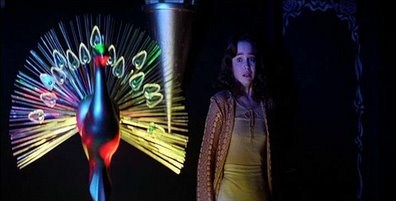
31 days, 31 faves: Suspiria


It was a major toss up for me whether to include Suspiria or Phenomena in my 31 Days posts, but as you can see, I went with director Dario Argento's supernatural masterpiece.

Suspiria is so revered among most horror fans (and I must say those who don't like it, seem to dislike most Italian cinema altogether) that it almost seems a moot point to review or discuss it. Everyone seems to have seen it and have opinions on it, but nonetheless...

As the opening credits start, the famous Goblin music begins and a voice over (the only one in the entire film) tells us that Suzy Banyon (Jessica Harper) has come from New York City to a world famous dance academy in Germany to study ballet.

When a wide-eyed Suzy exits the airport, we can immediately recognize that something unusual is happening. There is a raging storm outside, and when she walks outside she may as well have been in a hurricane, the wind is so strong. After being ignored by several taxis, she literally runs out into the street until one finally pulls over. The darkness of the German countryside seems very forboding as the storm intensifies and Suzy can barely see out the windows.

Finally arriving at the school, she watches as a girl is leaving in noticeable distress, yelling at someone inside. When Suzy herself is unable to get anyone to let her in, she is forced to go back to town. On the way, she observes the girl who fled from the school, running through the woods as if being chased by something. It really must be noted that as this is going on, Goblin's violent drum beats and wailing otherworldly music imbues the frightening tone the film has already set within the first eight minutes.

Pat (Eva Axen), the scared woman in question, arrives at a friend's apartment where she is comforted and reassured that all is okay. Pat doesn't believe it for a minute, refusing to discuss the particulars and adamantly stressing that she is leaving (like, the whole country) in the morning. As she dries off in the bathroom, she stands by the windows and stares out as the rain still pours down. Upon further inspection, she's shocked when a pair of malicious yellow eyes glare back at her. Suddenly the window breaks and an arm (incidentally the hairiest arm I think I've ever seen) reaches in to grab her, pulling her outside where the assailant stabs her in the chest.

As her friend screams from outside the door, the murderer ties a rope to Pat and proceeds to stab her several times right in the heart - and I mean this is a graphic, no-holds-barred plunge directly into the heart. Argento, as usual, has no fear of showing the red stuff. But we aren't done yet. As Pat is pushed through a stained glass window ceiling, she is hung by that rope and her friend lies dead beneath her, impaled by pieces of the broken window and frame. Wow. Just...wow.

In the morning, Suzy shows up at the dance academy, meeting first Miss Tanner (Alida Valli) who gives her a speech about how they were waiting all evening for her but she never showed. It's obvious this woman is a hard ass, and even though Suzy explains that she did arrive last night, Tanner still seems a bit rough around the edges.


She leads Suzy over to meet Madame Blanc (Joan Bennett). They are discussing the fact that Pat was murdered by a madman just after she was expelled the night before for 'improper conduct'. She's also sorry to tell Suzy that her room isn't prepared and she'll be staying in town with one of the girls until it is ready for her.

Suzy soon realizes Pat was saying something when she witnessed her leaving the night before that could be considered important to the case but she cannot remember what it was. As also in both Profondo Rosso and Tenebrae, Argento holds back that information from us, having his protagonists all be unable to recollect important moments. It drives the plot forward, yet serves to confuse and bewilder the audience - but it's effective.

She meets some of the other students, including Olga (Barbara Magnolfi), who she will be rooming with. Later, at Olga's, they discuss Pat's death, and Suzy remembers a few key words Pat may have said, secret and iris. Olga doesn't seem to care much, saying Pat was a busybody and always in trouble.

The next day at dance practice, Madame Blanc tells her that her room is ready but Suzy tells her she'd rather stay in town, which seems to piss Blanc off a bit. In contrast, Miss Tanner congratulates her on having such a strong will.

As Suzy walks the corridors of the academy, she is overcome and gets dizzy after a bizarre confrontation with the cook in the hallway. In dance practice, she tells Miss Tanner she is too weak to dance, but Tanner insists she try. She passes out though, and when she wakes up she has been moved into the dormitory against her wishes.

A doctor comes to see her and says she needs to rest, be on a restricted diet and drink more wine. (Yeah! The cure for all that ails you!)
Her new dorm neighbor is Sarah (Stefania Casini), who questions the wine prescription but rushes off when the dinner bell rings.

As Suzy readies for bed, she is startled to find a maggot in her hair. Noticing that they seem to be dropping onto her dressing table, she looks up and sees the ceiling crawling with them.
It's then revealed that they are everywhere in the school's second floor. Miss Tanner investigates the attic, crunching over thousands of maggots as she walks (ugh!). She finds cases of food that have spoiled and sets the girls up in the practice hall on the first floor for the night.

With the lights out, an eerie red light is cast over the room. After most everyone has fallen asleep, Sarah hears a strange snoring noise and wakes Suzy up to tell her that it sounds specifically like the directress that isn't supposed to be back at the school for weeks.

The next morning, Miss Tanner has a total shit-fit when she believes that the seeing eye dog that belongs to the blind pianist at the school has attacked Tanner's nephew and bitten him. Daniel (Flavio Bucci) screams in disagreement, swearing his dog would never do such a thing. He storms out (as quickly as a blind man can) with Tanner on his heels practically forcing him through the front door.
What Tanner didn't see was the mysterious cook, walking with the nephew right by the dog. We don't see what happened, but after Suzy got sick when she had her encounter with the cook, one tends to wonder.

As Suzy and Sarah discuss the fact that the directress was most certainly in the house, they notice that even though the staff supposedly goes home at night, they can hear them walking through the halls after hours, obviously staying inside the academy and all gathering together in private.

At the same time, Daniel is heading home from a brew house with his dog. Walking across the plaza he is blindsided (no pun intended) when a stone phoenix comes to life, scaring his dog into attacking him, viciously ripping out his throat. Hard to believe not a soul was in that plaza to help him though, am I right?

Suzy has a little heart to heart with Madame Blanc the next day, admitting to her that Pat had said the words iris and secret. Blanc seems surprised by this, but says she'll let the police know.

Soon after, Sarah explains that Pat was hysterical right before she left the school, that she had been taking notes about the strange things that had been going on in the school. Before Pat left, she gave the notes to Sarah, who agrees to let Suzy read the notes. She explains that Pat was trying to determine where the teachers went at night by counting the footsteps she heard outside her room.

But later, as Suzy struggles to stay awake, Sarah is paranoid because someone stole the notes. She only has one tidbit of information to give her, and asks if Suzy knows anything about witches. But Suzy falls asleep again before answering.

Sarah, frightened when she sees someone entering Suzy's room, runs to the attic to hide. Chased by an unseen assailant, Sarah bumps into a hidden attic room from which a pulsating light emanates. As she tries to hide, the stranger tries to gain access to the room. Soon Sarah piles boxes up so she can escape through the window, but as she does, she falls into a giant-ass pile of razor wire. (Because everyone keeps that around the house in case of emergency, right?) The killer reaches her and finishes the job.

In the morning, Suzy discovers Sarah is missing, and decides she absolutely has to speak to Sarah's psychiatrist, Dr. Mandel (Udo Kier!). Mandel explains some of the history of the school, including the fact that it was founded by Helena Markos, a Greek immigrant, who was thought to be a black witch. Markos is also known as Mater Suspiriorum, or the Mother of Sighs. However, the shrink says most of the time, people who think they are witches are just mentally ill. But the fact is that there are some witches, those who practice in powerful covens, that use magic to gain wealth and will do whatever they can to obtain it, including murder.

When Suzy arrives home she discovers all the students have went out, leaving her alone in the school. Seeing her dinner left for her, she is finally suspicious of the strange drink given to her each night and dumps it down the drain.

Counting the footsteps from Sarah's room, she finds herself at Blanc's office. She discovers irises painted on the walls and at last remembers what Pat had mentioned the night she died. Finding a hidden door behind the wall, she happens upon a secret room where a coven is discussing the fact that Suzy needs to disappear. (Meddling kids!) In other words, die - and soon. She sees that Madame Blanc seems to be the leader, the coven's black queen. Seeing the dead body of Sarah nearby, Suzy is able to sneak away, only to end up in a room in which a woman sleeps behind a curtain. A woman with a very recognizable snore.

When Suzy accidentally wakes the directress, the old witch dares her to try to kill her, and identifies herself as Helena Markos. She reanimates Sarah, who comes after Suzy with a knife. Able to grab a tail feather from a glass peacock, Suzy jumps at the ghastly outline of the directress and stabs her, effectively bringing her reign of terror to an end. (Well, that was certainly easy!)

The coven is unable to exist without her and they are helpless to defend themselves when unseen forces cause the building to fall apart around them. Suzy is able to get out just before the dance academy explodes in flames. The End.

The very best thing about Suspiria is the color. Vibrant splashes of color saturate nearly every scene. Brilliant blues on the walls, the reds of the makeshift sleeping quarters, the yellows of the walls outside the coven quarters...it's all so striking that you can't take your eyes off of it.
The entire film feels like you're in a dream - no, a nightmare.

Musically, Suspiria is far superior than most horror films, with a simply terrifying score from Argento favorite, progressive rock band Goblin. At times the pounding drums and never ending wailing seem almost too much to take, but honestly it's just perfect. Probably the most recognizable score of any Argento film, it's a haunting accompaniment to a stylishly sublime, aesthetically pleasing piece of horror film history.

The style of Suspiria is what is generally mentioned first in discussions of its mastery, and like any Argento film, you're going to get it in droves. Yes, the plot is sometimes perplexing, but that is par for the course with the Italian director. Sometimes in film, you have to look past confusing plot elements and just enjoy the stylized suspense. This is one of those times.

Sunday, October 24, 2010

31 days, 31 faves: Angel Heart


Confession time: I like movies about voodoo. In fact, I own several, including The Serpent and the Rainbow and The Skeleton Key -both of which I like quite a bit. But if pressed, I would always choose Angel Heart (1987) as my favorite voodoo film. I also enjoy movies about devils, demons & Satanism, not because I like Satan - but because I like how it messes people up. Angel Heart has a fair smattering of that as well, so it's just an all-out fun fest for me.
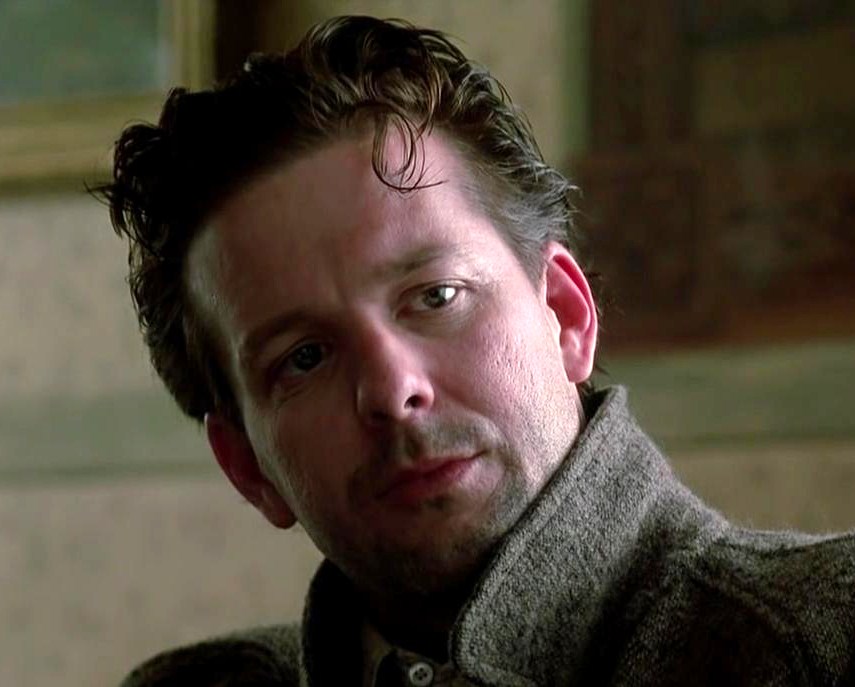
I first saw it many, many years ago, and it made an indelible impression on me. Mickey Rourke was so spot-on in his portrayal of the shabby private investigator digging into nasty secrets, he ruled the film. Then again he was in nearly every scene, how could he not?

I've been a fan of Mickey Rourke since his Diner days, and even though he's pretty much lost his looks and seems quite the shambles these days I still very much respect his acting talent. Angel Heart is my favorite of all of his films. (Yes, even more than 9 1/2 Weeks, ha!) It's a controversial flick, in particular because of the graphic sex scenes between Rourke and The Cosby Show's Lisa Bonet. She was trying to break out of her good girl stereotype, and wow - she accomplished that and then some.

Written and directed by Alan Parker from a screenplay based on the book 'Falling Angel' by William Hjortsberg, and brilliantly scored by Trevor Jones, Angel Heart tells the story of a man searching for a missing person that ends up being intricately involved in his own life.

New York, 1955. Private investigator Harry Angel is heading home down a dingy alley when he hears the phone in his office ring. Rushing to grab it, the man on the other line wants to set up a meeting with a Mr. Winesap in Harlem.
Meeting in a church hall of some kind, he listens in on a vibrant Harlem minister trying to get money out of his exuberant congregation. When Mr. Winesap (Dann Florek of Law & Order SVU!) finally retrieves him, they pass a room with a door open, and a woman is cleaning a major bloodstain off the wall. Apparently one of the preacher's congregation took a gun to his head.
Images such as these become commonplace in this film, with the dark and seedy underbelly of society rearing its ugly head.

Mr. Winesap's client, Louis Cyphre (Robert De Niro), wants Angel to investigate the disappearance of a war-time crooner, Johnny Favorite. It's very obvious right from the beginning that Mr. Cyphre is one strange individual. He's dressed all in black, has a cane at his side and his fingernails are much too long (but very well manicured to be sure) for a man. Something just isn't right with this guy.
When Harry says he's no clue who Johnny Favorite is, Cyphre explains that he gave Johnny some help after the war, and he'd like to collect on the debt owed. But the man went missing. He was injured in the war, enough to have amnesia and be sent to a special hospital where they allegedly did some experimental procedures that rendered Johnny a virtual zombie. It's also mentioned that his wounds pretty much ruined his face and made him unrecognizable.

Cyphre states all he wants is to know if Johnny is alive or dead. Each year they receive notice that Johnny is still at said hospital, but within the last week he and Winesap had made the trip there themselves, and were given the runaround. What they wish is for Harry to go check into it.

Off Harry goes, with the information given, to the clinic where Johnny (whose given last name was Liebling) is supposedly housed. He finagles his way through the front desk nurse, charming her into giving him info on Liebling. He finds record of the patient being transferred out of the hospital way back in 1943, but knows something is fishy because the transfer info is written in ballpoint, which didn't exist back then. Finding the name of the physician who signed off on the file, he goes to the doc's house.

Picking the lock and entering the house, he finds a stash of narcotics and injectables in the fridge, and a gun in his sock drawer. He waits around to talk to Dr. Fowler (Michael Higgins), surprising the poor old man and threatening to turn him in to police if he doesn't give him some info.
Seems Dr. Fowler faked Liebling's transfer because a man named Edward Kelly and an unidentified woman came and picked him up years ago. Fowler was paid off to keep up the ruse of him still being at the hospital.
Fowler, in a cold sweat cause he needs his morphine, is helped into bed by Harry, who is heading out to get a bite to eat before heading back for more chat with Fowler.

But when Harry gets back, Dr. Fowler has shot his brains out, making it obvious that these people involved with Liebling meant business, and were definitely not someone to mess around with. Harry cleans his prints off everywhere in the house and leaves.

With a new lead to follow but utterly wigged out, he meets with Cyphre again, explaining that he's not sure he can continue the investigation because of the danger involved and the fact that the cops might think he's a suspect in Fowler's death.

As the two speak, Cyphre peels a hard boiled egg. Which might not seem important until we see him roll it around and notice that Cyphre is wearing a ring that has a pentagram on it. Hmm... He convinces Harry to keep plugging away by upping his cash flow to five grand, an unheard of amount in those days.

Harry goes back to the room where he and Cyphre originally met and after some snooping, he opens a closet which turns out to be a religious altar of some kind. But certainly not a Christian one, what with eyeballs, a dead monkey, black candles, upside down crosses and other bizarre artifacts. Heading back down into the heart of the church, he sees a lone woman sitting in a chair dressed all in black. As a strange feeling comes over him (made even more eerie from the heart-beat sounds that permeate from the movie score), he is just about to touch her when he is attacked and chased from the church by three thugs. They race after him, through the church and out onto the street, eventually losing him during a religious parade.

Harry meets up with his Girl-Friday, who works for the NY Times and has been doing some digging for him. The two retreat to the bedroom for some hanky panky in which Harry learns more about both Johnny Liebling and the Times reporter.

As the two go over the case, Harry has a strange moment of déjà vu, in which he envisions a soldier standing in Times Square, circa WWII, in a crowd of thousands. The incessant heart beat background amps up again and Harry seems a million miles away.

Harry follows up on a few leads, speaking first to Johnny's bandleader Spider, from who he finds out Johnny had a secret love named Evangeline Proudfoot who ran a voodoo shop in Harlem.
Also in the mix was a palm reader named Madame Zora - a fortune teller. Madame Zora ends up being Johnny's (other) girlfriend, Margaret Krusemark (Charlotte Rampling), who packed up and headed south to New Orleans several years ago.

Traveling to steamy New Orleans, Harry makes an appointment to see Margaret for a reading. He notices she has a heaping handful of pretty unusual decorations in her house, such as a mummified hand, further validating that she's involved in something other than what is considered normal in polite society. She asks him a series of questions in order to do his chart, and she is somewhat surprised to learn he was born on Valentine's Day - and tells him she knew a man born that exact same day. When the questions get a bit too uncomfortable and it's obvious Harry is prying, Margaret sends him packing - but not before we notice Margaret's necklace also has a pentagram on it. Ahh, the plot thickens.

Next up, he ventures to a voodoo shoppe trying to track down Evangeline Proudfoot. He ends up in an extremely poor section of the bayou, with shacks meant to be houses and an endless stream of children running barefoot all over the place. He meets up with Evangeline's daughter, Epiphany (Lisa Bonet), who tells him Ms. Proudfoot is dead.
(Now I'm sure every man watching this film no doubt got a raging hard-on after seeing Lisa Bonet doing her version of a wet t-shirt contest right here. Well boys, it's only just begun.)
He asks if she knows Johnny, but she replies no. She also doesn't admit to knowing Toots Sweet, an old band member of Johnny's that Harry wants to talk to. He leaves, but not before he writes his address on a piece of paper to give her. (Ah, what did we do before cell phones and email?)

He heads over to a small club where Toots is playing. After questioning him just a bit too much, Toots's buddies run him out of the club, tossing him into an alley. Harry waits for Toots though, and follows him home. Only he doesn't go home, he heads to an isolated place where a bloody voodoo ritual is going on, complete with wild dancing, moaning and crying, pounding drums, and chicken sacrifices. Complicating things further is the fact that Epiphany seems to be the star of the show, having herself a good old time with the dead chicken and its blood.

Supremely freaked out at this point, he still follows Toots home. But Toots is wise to his game and the old man tries to cut him with a straight razor. But Harry turns the tables and accosts Toots, trying to garner all the information he can. He gives Toots his address as well, and leaves, dropping the straight razor on the floor.
Following that, he has another of his illogical and surreal daydreams in which he is covered with blood and approaching a woman in black again. He drops a razor from his bloody hands and just as he touches the woman he comes back to reality and realizes he's not alone.

The cops are in his room, and begin to question him about Toots. Seems the man was murdered (by choking him with his own genitalia!) and they found Harry's address in his hand. They warn him not to leave town until they talk to Mr. Winesap about the true nature of Harry's business in New Orleans.

Harry has yet another strange episode, which is becoming more and more like a flashback, he realizes it's New Year's Eve in Times Square, and just as he again approaches the man in uniform, he's back to the present. He's understandably confused as to the reason he's remembering these things; is he losing it or is he channeling something evil?

As he heads back to Margaret's, he finds her lying dead on her floor, her heart removed. He searches her place, looking for any clue he can find, opening every jewelry box, every notebook...until he finds her heart lying on a desk. That my friends, is not a good day.
Everywhere he goes, it's obvious someone is following him. At this point, he gets attacked by a dog, followed by a couple of guys warning him to leave town. Seems everyone is in on the secret except him.

He heads back to Epiphany's, where he lets her know that he's aware she's a mambo priestess and that she lied about knowing Toots. Nonchalantly, she shocks him by admitting that Johnny Favorite is her daddy. Johnny left her mom when he got drafted and was never heard from again.

Summoned to a church, he finds Louis Cyphre is in town and waiting for an update. He explains about his many brushes with death and they discuss all the particulars. Can I just say it's fucking amazing that Harry hasn't figured out the enigmatic Mr. Cyphre is the devil incarnate. Big duh there.
But Cyphre convinces Harry to continue the case.

At his hotel, he finds Epiphany waiting for him at his door in the rain.
Inside, they have a little discussion about Johnny and then some entirely inappropriate words about sex in general.
She has already mentioned the fact that she is only seventeen, but the way they look at each other is self-explanatory. She describes her relationship with spirits that got her pregnant, and the fact that her mother said Johnny was a terrific lover.
As Lavern Baker's Soul on Fire plays in the background, we finally get to some seriously provocative sex. I'm actually talking quite graphic, without a doubt. (While edited to get an R-rating in theaters, the special edition DVD is most certainly unrated, and if the sex was merely simulated I'll eat my hat - and yours as well.)
With a roof that is leaking in several places, the rain gets louder and louder as drops plop into pans placed around the room, and the sex becomes nearly violent as images of orgies and scarlet death flash into the scenes. The rainwater turns to blood, and soon the walls are just running red.
It's an amazing scene, so raw and untamed - yet surprisingly disturbing.

Cops turn up again the next morning, telling him what he already knows - about Margaret Krusemark being dead. Of course they also have words about the black girl in his room, stating polite society doesn't stoop that low in New Orleans (it is the mid-fifties after all). Harry comes back with a witty "Well I ain't from here..."
After they leave, Epiphany is taking a bath and singing one of Johnny's songs, which Harry seems to find unnervingly familiar.

Okay, here's where you'll want to stop if you haven't seen the ending. You've been warned.

Harry heads off to a primitive (horse) bush-race track to have a chat with the elusive Edward Kelly (Stocker Fontelieu) the man who supposedly took Johnny out of the hospital and down south. Turns out his real name is Ethan Krusemark - Margaret's father - making her the unidentified woman with him the night Johnny was taken away.

Edward admits he's had his goons chasing him all along, and that he's the one that stole Johnny away. Margaret and Johnny were into all kinds of black magic, and Johnny made a pact with Satan - selling his soul for stardom.
Attempting to deceive the Devil , they stole a man from the street on New Years Eve - took him to a hotel, cut him open and ate his heart in a bizarre ritual. Favorite assumed the original Harry Angel's identity to escape the devil's wrath by pretending to be wounded in the war and tucked away in the hospital. Margaret kept the soldier's dog tags, hiding them away in a vase.

At this point, Harry starts remembering. He finds Kelly, dead in a vat of boiling gumbo. Running back to Margaret's he searches for the vase. Finally finding it, he breaks it open and finds the dog tags of the soldier who was stolen from the street. The tags say Angel, Harold.

Louis Cyphre appears in the room, finally making it know that he is Lucifer (the name being a play on the word) and that he's come back to get Johnny's soul that is owed to him. Utterly destroyed, Harry realizes he IS Johnny Favorite, and under the devil's influence he killed all those people... Then it dawns on him that Epiphany is actually his daughter.

He rushes back to his hotel but finds Epiphany dead on his bed, his dog tags around her neck and lying in a pool of blood. The cops are already there, and issue him a warning that he's going to burn for this.
Harry/Johnny agrees, adding, "In Hell."

The final scene as the credits run is Johnny, riding an old iron elevator down floor after floor, most certainly to hell.

Angel Heart is a very visual, very atmospheric film. There are so many dark yet beautiful images, some of which are repeated several times for effect, such as the fans. In scenes that precede or follow violence, we almost always see a scene of a fan, generally an old fashioned slow-moving one.
The New Orleans and Harlem locations also lend a lot of grim reality to the film. The nastiness of human nature can be scarier than anything conjured up by a filmmaker.

There are such grim, morbid overtones from the beginning to the end of Angel Heart. From the ominous back alley bowels of a city to the sinister religious innuendos infused throughout, the film has no chance of a happy ending, you know that going in. But the hopeless journey is so frighteningly engrossing that you can't take your eyes off the screen.


Sunday Bloody Sunday


Zombies of Mass Destruction (2009)


Isolation (2005)


Two Orphan Vampires (1997)


Kill Theory (2009)


Cannibal Man (1974)